Student Visa Requirements 2026 for Indian Students: What’s Changed & How to Get It Right
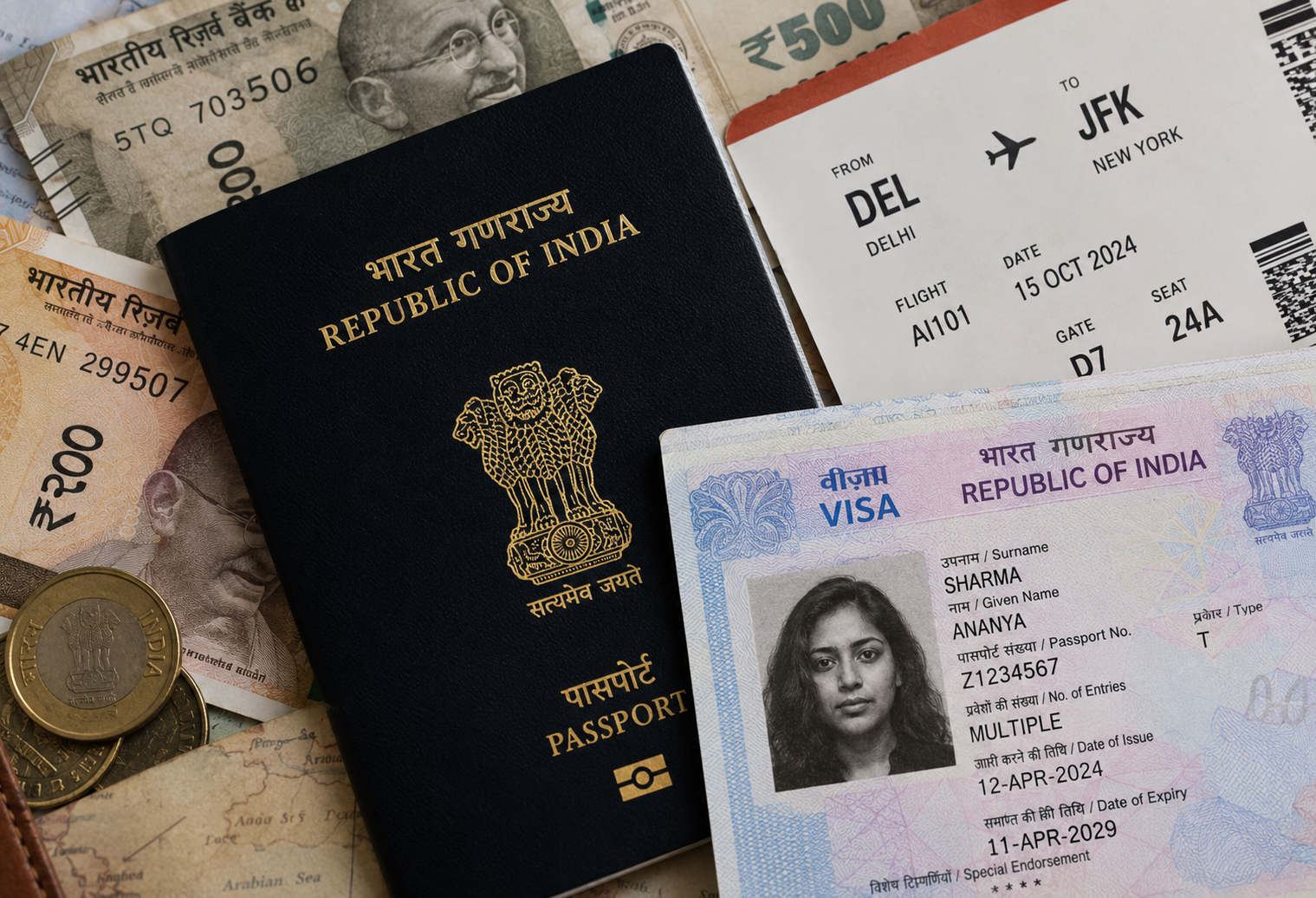
You’ve received your offer letter. Academically, the hardest part is done. What comes next is your student visa, a process that is often treated as routine paperwork. But in 2026, visa requirements are evolving quickly, and getting the details right matters.
The UK, US, Canada, and Australia have all introduced changes to their student visa rules over the past year, from financial requirements and application fees to post-study work options. Understanding these changes before you apply can help you plan your finances, prepare the right documents, and avoid unnecessary delays.
This guide covers the key student visa requirements for Indian students in 2026, including what has changed, what to prepare, and what to watch for throughout the application process.
1. Start Earlier Than You Think You Need To

The standard advice is to apply two to three months before your departure. But your timeline should account for more than the visa application itself. Depending on your destination, you may need to complete biometric appointments, medical checks, financial documentation, university paperwork, and other requirements before your application can be submitted.
Start preparing your student visa requirements as soon as your university confirms your place. This gives you time to identify missing documents, arrange funds, and address any questions about your application before your intended travel date.
2. Know the Visa Rules for Your Destination
Each country has its own immigration system, and student visa rules can vary significantly depending on where you plan to study. Here are the key changes Indian students should know before applying for these destinations:
United Kingdom
- Visa application fee: £558 for applications made outside the UK.
- Financial maintenance: Students may need to show funds for living costs, with the required amount depending on whether they study in London or elsewhere in the UK.
- Graduate Route (post-study work): Eligible graduates who apply for the Graduate visa on or before 31 December 2026 can receive two years. For applications made on or after 1 January 2027, the Graduate visa will generally be granted for 18 months for eligible bachelor’s and master’s graduates. PhD and other doctoral graduates will continue to receive three years. This means students starting a Master’s in September 2026 are likely to fall under the 18-month Graduate Route if they complete their course and apply after 1 January 2027.
Source: GOV.UK: Graduate visa - Healthcare surcharge: The current IHS rate for students is £776 per year.
- Settlement: Long residence is a separate route that can allow eligible people to apply for settlement after 10 continuous years of lawful residence. This should not be confused with a blanket rule that all Student visa holders must wait 10 years for settlement.
- English proficiency: Your university’s English-language requirements and the immigration rules are separate considerations. Check both before applying.
United States
For an F-1 student visa, you will generally need your Form I-20, the Certificate of Eligibility for Nonimmigrant Student Status, from your institution. You will also need to complete the DS-160 and meet the applicable visa requirements. The U.S. Department of State currently lists a $185 non-refundable visa application fee and notes that interview wait times vary by location, season, and visa category.
A major 2026 change: New rules affecting international students take effect on September 15, 2026. The Department of Homeland Security is moving F-1 students away from the previous “duration of status” admission system toward a fixed period of admission. For most F students, the admission period will generally correspond to the programme length listed on the Form I-20, subject to a maximum of four years.
The change is particularly important for students whose programmes, OPT arrangements or academic timelines require them to remain in the US beyond their initial period of admission.
From September 15, F-1 students will generally be admitted for a fixed period rather than for “duration of status.” Students who need additional time may need to take further immigration steps, including applying for an Extension of Stay (EOS) with USCIS in circumstances covered by the new rules. Students should work with their designated school official (DSO) when determining whether an extension is required.
The new rules also introduce a 30-day departure period after completion of the programme or authorised post-completion OPT/STEM OPT under the new framework.
For students already in the US when the transition takes effect, specific transition provisions apply. Students planning to travel outside the US after the rule takes effect should also understand how their admission period may be handled when they return.
For Indian students planning to begin a US programme in late 2026 or beyond, this makes it especially important to understand not just the visa application itself, but how your Form I-20, programme duration, SEVIS record, and future OPT plans interact with the new rules.
Canada
Canada’s student immigration system has also changed significantly. The Student Direct Stream (SDS) ended on November 8, 2024, so applications are now processed through the regular study permit system. Depending on the institution and circumstances, students may also need a Provincial Attestation Letter (PAL) or Territorial Attestation Letter (TAL), unless an exemption applies.
Check the current IRCC requirements for your programme, institution and province before submitting your application.
Australia
Australia requires international students to meet its Student visa requirements, which can include evidence of financial capacity, English-language ability and health insurance, depending on the applicant’s circumstances.
The Department of Home Affairs’ current document checklist indicates that applicants may need evidence covering travel costs, 12 months of living costs and tuition fees, as well as relevant evidence for accompanying family members. Applicants should follow the personalised document checklist generated through ImmiAccount.
3. Your Document Checklist

Your documents are at the centre of the visa application. The exact requirements vary by country, visa category, and individual circumstances, so always check the current official requirements before submitting.
Common documents can include:
- Valid passport
- Official university acceptance or offer letter
- CAS for the UK, Form I-20 for the US, or the relevant study permit documentation for Canada and Australia
- Bank statements or other acceptable financial evidence
- Education loan sanction letter, if applicable
- Visa application fee payment confirmation
- Biometric appointment or enrolment confirmation, where required
- Health insurance or healthcare documentation, where required
- English-language test results, where applicable
- Academic records and previous qualifications
- Additional documents requested by the relevant immigration authority
Practical note
Check photo specifications carefully. Dimensions, background requirements, and recency rules can differ between countries.
More importantly, don’t assume that a document accepted for one country’s visa will automatically satisfy another country’s student visa requirements. Financial evidence, translations, medical requirements, and supporting documents can vary considerably.
4. The Visa Interview: What Officers Are Actually Assessing

A visa interview, where required, is an opportunity for the immigration officer to assess your application and your circumstances.
Questions you should be able to answer clearly include:
- Why this university and this course?
- Why did you choose this particular programme?
- What do you plan to do after graduating?
- Who is funding your education, and how?
- How does your chosen course connect with your academic or career plans?
- What do you know about the university and programme?
- Where do you plan to live?
- How will you cover your tuition and living expenses?
Specificity matters. Instead of simply saying that you chose a university because it has a good reputation, be prepared to explain what attracted you to the programme, such as its curriculum, faculty, research opportunities, industry connections or other relevant features.
Your answers should also be consistent with the information and documents submitted in your application.
5. Staying Updated Throughout the Process
Visa rules can change during application seasons, particularly when new immigration policies or regulations are introduced.
The safest sources are the official immigration authority, embassy or consulate website for your destination country. Your university’s international student office can also help you understand institution-specific processes and documentation.
For complex immigration situations, consider consulting a qualified immigration professional rather than relying solely on forums or peer advice.
For Indian students, the key is to treat the visa as part of the study-abroad planning process rather than something to handle at the very end. Your finances, documents, university timeline, travel plans and post-study goals can all affect the information you need to prepare.
Final Checklist Before You Apply
Before submitting your application, make sure you have:
- Checked the latest student visa rules for your destination
- Confirmed the exact financial proof required
- Prepared your university’s required visa document
- Checked passport validity
- Organised your financial documents
- Completed the relevant application forms accurately
- Paid the applicable visa and healthcare fees
- Completed biometrics or booked the required appointment
- Prepared for an interview, if applicable
- Checked the latest official guidance immediately before submission
Student visas are not simply a final administrative step after university admission. They are a separate part of your study-abroad journey, with their own financial, documentation and compliance requirements. Starting early and understanding the current student visa requirements can help you approach the process with greater clarity and fewer last-minute complications.
Conclusion: Get Your Student Visa Right, From the Start
Your university offer is only one part of your study-abroad journey. Your student visa determines whether you can turn that offer into a smooth transition to university.
With student visa rules changing across major study destinations, the process requires careful planning, accurate documentation, and an understanding of the requirements specific to your destination and profile.
At EDUCIS, we help students look beyond the application itself. From choosing the right university and building a strong profile to navigating the study-abroad process, our mentoring is designed to help you make informed decisions at every stage.
Planning to study abroad?
Speak to EDUCIS about your university and study-abroad journey.
Book a Consultation–>
Book your first
session with Educis
Create My College List Now
Build and Improve My Profile
Help Me Choose My Subjects
Plan My Admissions Strategy
Start My Application Today
Find the Right Program Now

Start your journey with Educis!